Heating, Cooling & Air Filtration for South Texas Petrochemical Facilities
Tillman & Associates supplies industrial and explosion-proof heaters, replacement HVAC coils and air-quality equipment for petrochemical and refining facilities. From our Houston office, we help match products to classified process areas and plant support facilities, including equipment buildings, maintenance shops, laboratories and offices.
Quoted and supported across Houston, San Antonio, Austin, Corpus Christi, Beaumont, College Station and Galveston and surrounding areas.
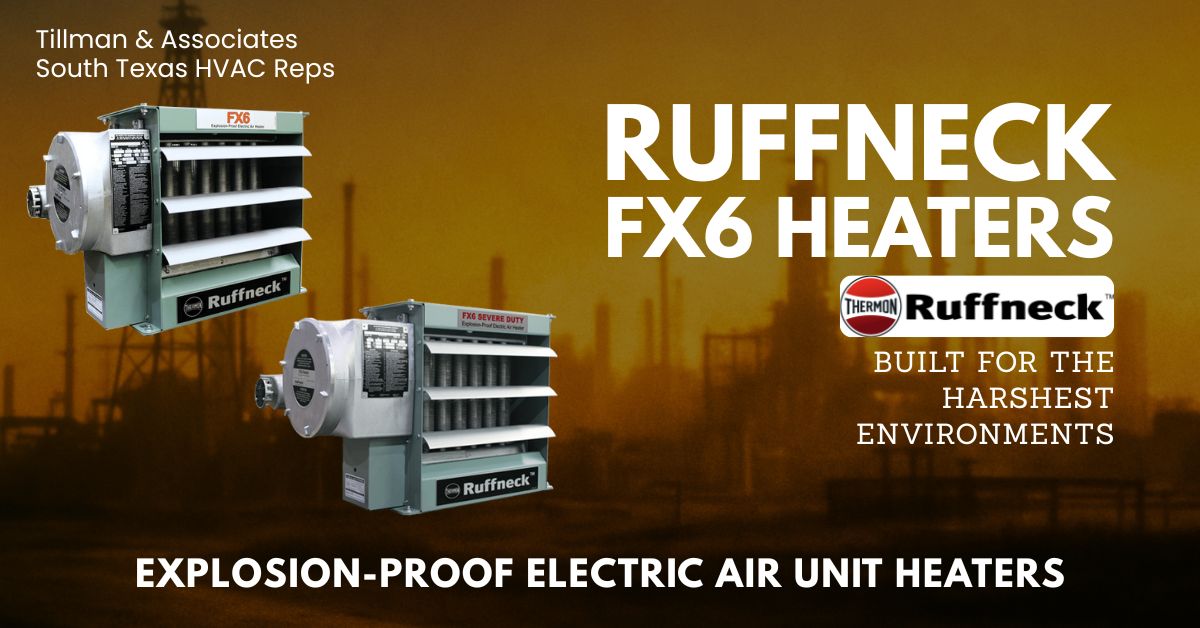
Ruffneck heaters for appropriately classified equipment buildings and enclosed plant spaces. Start with the required classification, gas or dust group, temperature code, heating load, voltage and ambient range.
Heat maintenance shops, warehouses and other plant support spaces with equipment selected for the actual environment. Steam, hot-water and electric options depend on the application and available utilities.
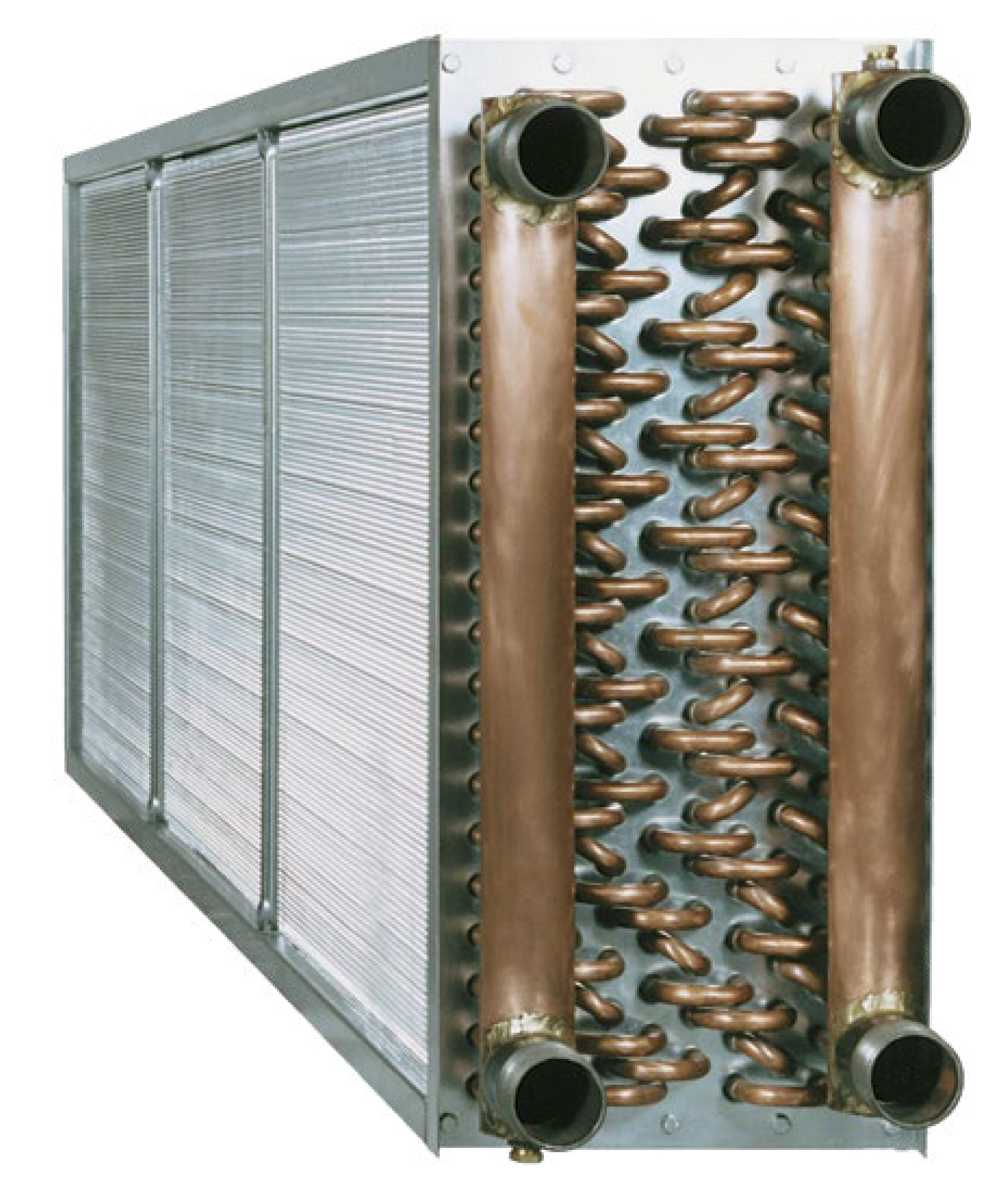
Replace steam or hot-water coils in existing air handlers and make-up air systems. Review dimensions, connection locations, fluid conditions, airflow and required leaving-air temperature.
Replace chilled-water or refrigerant coils in plant HVAC equipment. Match fit and duty while reviewing corrosion exposure, materials, coating options and access for installation.
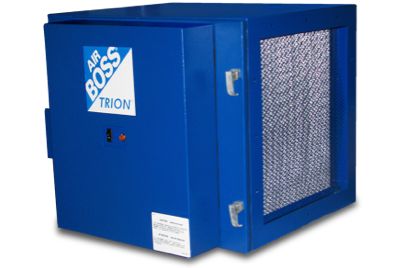
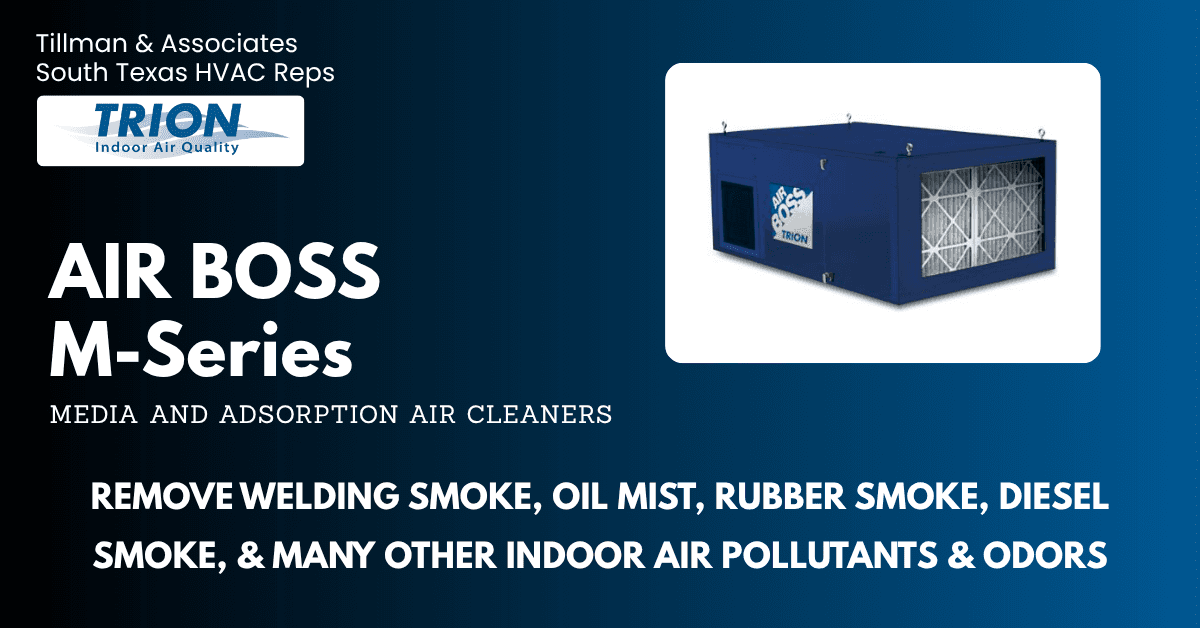
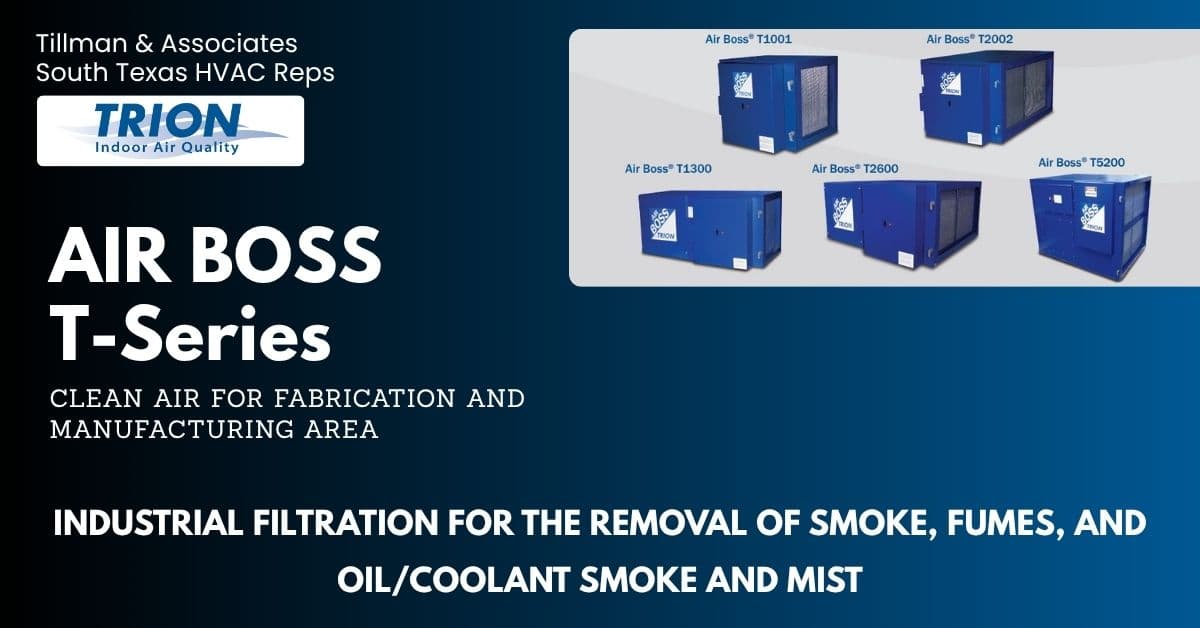
Trion air cleaners address applications such as oil and coolant mist from machining in plant maintenance shops. Select the collection method around the contaminant, airflow and process; classified or combustible applications require specific review.
Steril-Aire UV-C systems help control microbial buildup on cooling coils and drain pans in suitable support-building air handlers. Review fixture placement, access and the installation environment.
Envirco fan-filter and clean-air equipment can support particulate-sensitive laboratory and clean work applications. Select filtration and airflow around the process; clean-air equipment is not a substitute for chemical fume containment.
Particulate filtration and UV-C do not remove flammable gases or establish a safe atmosphere. Product suitability, certifications and installation requirements must be confirmed for the specific application.
What makes a difference
Understanding hazardous locations
A hazardous (classified) location is an area where flammable gases, vapors, combustible dust or ignitable fibers can create a fire or explosion hazard. Selecting HVAC equipment starts with the equipment needed and the classification assigned to its installation area.
Read the classification · Example designation
01 / Hazard type
Class I
Flammable gas or vapor
02 / Operating conditions
Division 2
Generally abnormal release conditions
03 / Gas group
Group D
Propane-group classification
04 / Temperature code
T3B
165°C / 329°F maximum surface temperature
Illustrative designation only. Confirm the complete equipment marking and project requirements; this example does not identify a specific product approval.
Class: the type of hazard
Class I covers flammable gases or vapors; Class II covers combustible dust; Class III covers ignitable fibers and flyings. Petrochemical projects often involve Class I areas, but the site's classification governs selection.
Division: when the hazard can occur
Division 1 includes areas where ignitable concentrations may occur during normal operation. Division 2 generally addresses abnormal releases, equipment failures, or loss of protective ventilation. These are summaries, not a substitute for the project's classification drawings.
Group: the substance involved
Gas Groups A, B, C and D distinguish materials with different ignition and explosion characteristics. Examples include acetylene, hydrogen, ethylene and propane, respectively. Confirm the actual group: an explosion-proof label alone does not establish suitability.
Temperature code: surface temperature
The equipment's marked temperature code limits its maximum surface temperature under specified conditions. Match it to the material's ignition characteristics and the required ambient range. T3B, for example, corresponds to 165°C (329°F).
Environment: conditions beyond classification
Salt air, chemical exposure, washdown, outdoor weather, vibration and temperature extremes affect materials and equipment selection. Explosion-proof, corrosion-resistant and weather-resistant describe different requirements.
Some projects use a Zone classification system. Send that designation as specified rather than assuming a direct Division-to-Zone conversion. Area classification is established by the project's qualified design team and applicable authority; we help review equipment against those requirements.
The lines that serve it
Heating, cooling & classified-area projects
Equipment selection and any hazardous-location approvals are specific to the model, configuration and installation.
What information do you need to select a hazardous-location heater?
Send the required equipment type, heating load or room conditions, classification, gas or dust group, temperature code, ambient range and electrical supply. Include the project specification and existing nameplate when replacing a unit.
Does explosion-proof also mean corrosion-resistant or washdown-rated?
No. Hazardous-location protection, corrosion resistance and enclosure protection address different conditions. Each must be reviewed against the actual installation.
Can you replace a cooling coil in an existing industrial air handler?
We can review replacement coils from Heatcraft by Modine. Send dimensions, connection details, photographs or drawings, airflow and fluid or refrigerant conditions so fit and performance can be evaluated.
Which air-quality products fit shops versus laboratories?
Maintenance-shop smoke and mist may call for industrial collection equipment; particulate-sensitive laboratory work may call for HEPA/ULPA filtration. HVAC UV-C addresses microbial control. None of these functions alone establishes flammable-gas removal or hazardous-location approval.
Tell us what equipment you need and the hazardous environment requirements, and we’ll match the right products to deliver the right solutions.
Include the project location, equipment duty or capacity, available utilities and any required classification, group and temperature code. Drawings, specifications and existing nameplates help us get started.